Meta title: Terminal Blocks & Connectors for Panel Building | Buyer's Guide Meta description: A buyer's guide to terminal blocks and connectors for industrial panel building — types, key specifications, and how to choose reliable components for your control panels. Target keywords: terminal blocks, panel building components, industrial connectors, control panel components, DIN rail terminal blocks
Every control panel, switchgear assembly, or junction box depends on dozens — sometimes hundreds — of terminal connections. Individually, a terminal block is a small, unglamorous component. Collectively, they determine how reliable, serviceable, and safe the entire panel is. Getting terminal block and connector selection right is one of the highest-leverage decisions in panel building.
Why Terminal Block Selection Matters More Than It Looks
A poorly chosen terminal block — undersized for the current load, incompatible with the wire gauge, or lacking proper insulation — becomes a point of failure that's disproportionately expensive to trace and fix once a panel is commissioned. Reliable panel building components reduce commissioning time, simplify future maintenance, and lower the long-term risk of connection failures.
Types of Terminal Blocks to Know
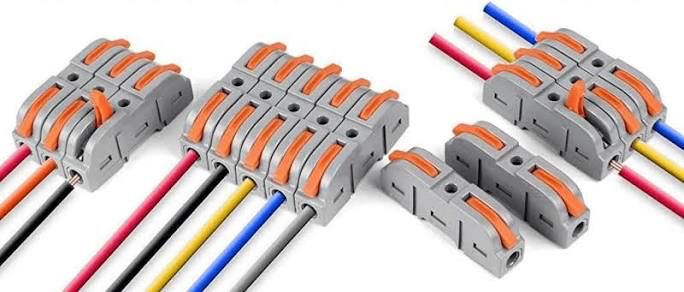
Feed-through terminal blocks — the standard workhorse for connecting incoming and outgoing wires on a DIN rail Ground/earth terminal blocks — identifiable by their green-yellow marking, critical for safety compliance Fused terminal blocks — combine circuit protection with the terminal connection itself Disconnect terminal blocks — allow circuits to be isolated for testing or maintenance without removing wiring Multi-level terminal blocks — save panel space by stacking connections vertically
Brands like Weidmüller and Phoenix Contact are widely specified in industrial panels precisely because their DIN rail terminal blocks offer consistent tolerances and broad compatibility across accessory ranges (end plates, jumpers, marking systems).
Key Specifications to Check
When selecting industrial connectors and terminal blocks, verify:
• Rated current and voltage against your actual circuit load, with appropriate margin
• Wire gauge compatibility — solid vs. stranded, and the cross-section range supported
• Connection type — screw clamp, spring clamp (push-in), or tension clamp, each suited to different maintenance and vibration profiles
• Certifications — UL, CE, or other standards relevant to your end application
• Panel space constraints — width per pole, especially in compact enclosures
Spring-clamp terminals have become increasingly popular in high-vibration environments because they resist loosening over time compared to screw-clamp designs — worth considering for panels installed near rotating machinery.
Standardization Simplifies Everything Downstream
Panels built with a consistent terminal block system — same brand, same accessory range — are significantly easier to maintain and expand later. Mixing brands often means incompatible marking systems, jumpers, and end brackets, which slows down both installation and future troubleshooting. Sourcing your control panel components from a distributor that stocks a full, compatible range under one or two brands removes this friction.
The Bottom Line
Terminal blocks and connectors rarely get the attention given to larger panel components, but they're where a disproportionate share of field issues originate. Choosing the right type, correctly rated and sourced from a consistent, genuine supply chain, pays off in commissioning speed and long-term panel reliability.
Pankaj Electricals supplies Weidmüller, Phoenix Contact, and other leading terminal block and connector brands to manufacturers and PSUs building and maintaining industrial control panels across India.